
Electric vs. Gas Pressure Washers: A Practical Comparison
Weigh power, portability, noise, and maintenance to decide which type of pressure washer suits your cleaning tasks.
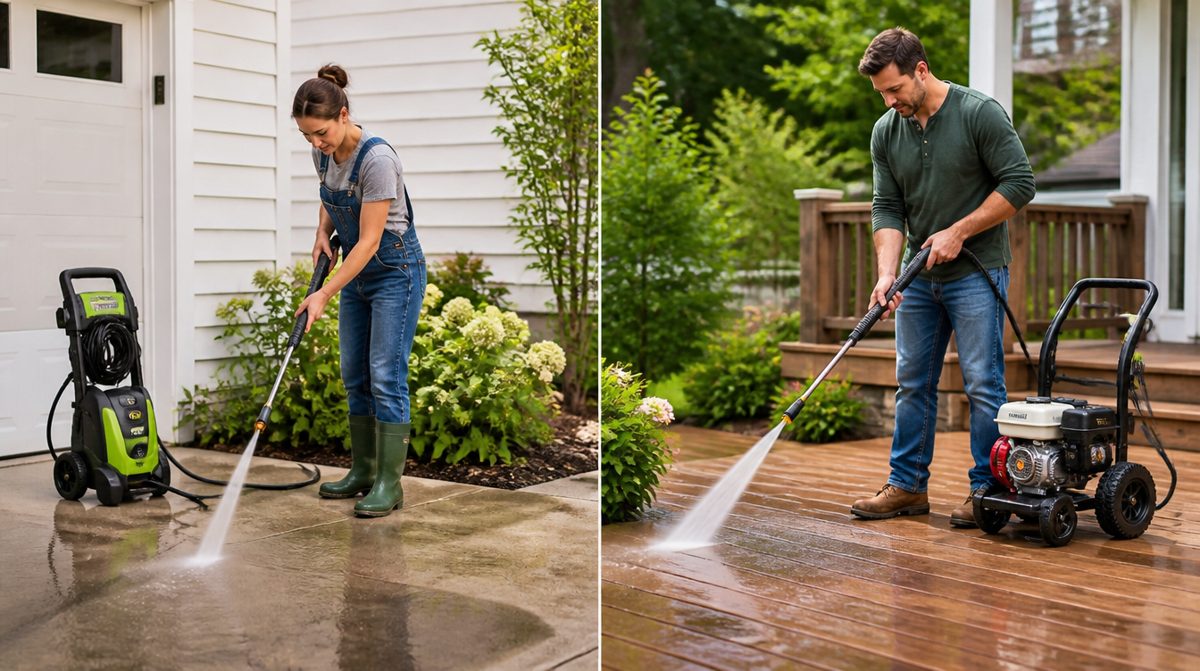
A pressure washer can clean siding, patios, vehicles, and outdoor furniture in a fraction of the time that scrubbing takes. The big decision is whether to choose an electric model or a gas-powered one. The two differ in power, convenience, and upkeep, and the right choice depends on the surfaces you clean and how often you will use the machine.
Electric Pressure Washers
Electric models plug into a standard household outlet and use an electric motor to drive the pump. They are generally lighter, quieter, and easier to start and store. Because there is no engine, there is no fuel, oil, or tune-up to manage, and there are no exhaust fumes, so they are often better suited to tight areas and lighter work.
Good for:
- Cars, bikes, and grills
- Patio furniture and small decks
- Siding on a modest home
- Occasional seasonal cleaning
Limitations:
- Generally less cleaning power than gas models
- Limited by the length of the cord and the hose, and by access to an outlet
- Extension cords must be rated for outdoor use and for the machine's electrical load
- May take longer on heavy stains or large surfaces
Gas Pressure Washers
Gas models use a small engine to power the pump. They typically deliver more force and water flow, which cleans large surfaces more quickly and handles stubborn grime on concrete, brick, and heavily soiled decks. Since they do not need an outlet, you can use them far from the house.
Good for:
- Large driveways and walkways
- Heavily stained concrete and masonry
- Big projects and frequent use
- Locations without convenient power
Limitations:
- Louder, heavier, and bulkier to move and store
- Engine maintenance, including fuel handling and oil checks
- Exhaust fumes mean the machine must be used outdoors only, in open air and away from windows and doors
- Greater risk of damaging softer surfaces if the pressure is too high
Understanding the Ratings
Pressure washers are described by pressure and by water flow. Pressure, measured in pounds per square inch, gives the force of the stream. Flow, measured in gallons per minute, affects how quickly the spray rinses dirt away. A combination of both determines cleaning speed. Nozzle tips change the spray angle, with narrower angles being more forceful and wider angles gentler. Always begin with a wider tip and keep a safe distance from the surface, because too much force can strip paint, gouge wood, and etch brick.
Safety Reminders
- Never point the spray at people, pets, or yourself, because the stream can cause serious injury.
- Wear closed-toe shoes and eye protection.
- Keep the spray away from electrical panels, outlets, and windows.
- Do not use a ladder while operating a pressure washer, since the spray gun can kick back.
Which Should You Choose?
If you clean a few outdoor items now and then and value easy storage, an electric machine is usually enough. If you have a large property, tough stains, or frequent projects, a gas model may save time, provided you are comfortable with engine upkeep and storage. Many homeowners find that renting a gas washer for an occasional big job is more practical than owning one.
Care and Storage
Before storing any pressure washer for winter, disconnect the hoses and drain the pump so leftover water cannot freeze and crack internal parts. Gas models need their fuel handled according to the manual, and electric models should be stored away from damp areas. Check hoses and fittings for wear at the start of each season, and replace any that show bulges or cracks.
Takeaway: Electric suits light, occasional work with minimal fuss, and gas suits large, heavy-duty jobs. Pick based on your surfaces and how often you will use it.