
How a Tank Water Heater Works: Basics and Maintenance
Understand the parts inside a storage water heater and the simple upkeep that helps it last.
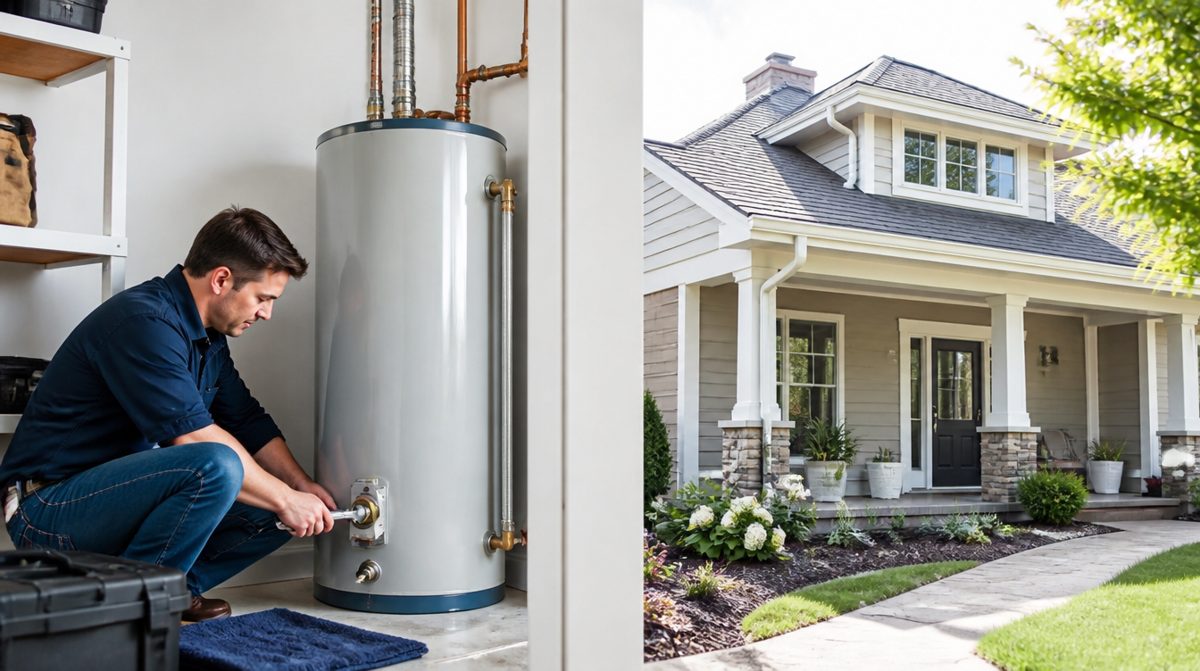
Hot water is something most people notice only when it runs out. A traditional tank water heater is a simple machine that stores and heats water so it is ready when you turn on a tap. Knowing the basics helps you spot problems early, use it efficiently, and know when to call a professional.
How It Works
Cold water enters the tank through a dip tube that directs it to the bottom. A heating source at or near the bottom warms the water, either a gas burner or an electric heating element. As water heats, it rises, so the hottest water collects at the top, where the outlet pipe draws it off to your faucets. A thermostat monitors the temperature and switches the heating source on and off to maintain the set level.
Key Parts and Sediment
- Tank. A steel vessel lined to resist corrosion, wrapped in insulation inside the outer jacket.
- Anode rod. A metal rod inside the tank that corrodes in place of the tank walls, extending tank life.
- Thermostat. Controls the water temperature.
- Temperature and pressure relief valve. A safety valve that opens if pressure or temperature gets too high, usually with a discharge pipe that points downward.
- Drain valve. A spigot near the bottom used to empty the tank.
- Gas burner and flue, or electric elements. The heat source and, for gas units, the venting system that carries exhaust outside.
Sediment and Why It Matters
Minerals in water settle at the bottom of the tank over time. This sediment can insulate the water from the heat source, reduce efficiency, and cause rumbling or popping noises as water boils through it. Draining part of the tank periodically, according to the manufacturer's directions, helps clear out buildup. Homes with hard water often see more sediment.
Basic Maintenance Tasks
- Check the temperature setting. Many manufacturers suggest a moderate setting to reduce scalding risk and save energy. Follow the guidance in your manual and take extra care when children or older adults live in the home.
- Test the relief valve. Lift the lever briefly and let it snap back to confirm that water flows and the valve closes. Make sure the discharge pipe directs hot water safely downward, and be careful of the hot water.
- Flush the tank. Attach a hose to the drain valve, direct it to a safe drain, and follow your manual's steps, including turning off power or gas first.
- Inspect for leaks and corrosion. Look around the base and the pipe connections for moisture or rust.
- Check the anode rod. A professional can inspect it and replace it if it is heavily worn.
- Insulate pipes. Foam sleeves on the first few feet of hot water pipe reduce heat loss.
Warning Signs
- Water around the base of the tank
- Rusty or discolored hot water
- Rumbling, popping, or banging sounds
- Not enough hot water, or water that runs out quickly
- A pilot light that keeps going out, or a smell of gas
If you ever smell gas, leave the house and call your gas utility or emergency services from outside. Leaks from the tank itself usually mean replacement is needed.
Know Your Unit's Age
The serial number on the label often encodes the manufacture date, which helps you judge its age. Storage tanks do not last forever, and planning for replacement before a failure lets you shop calmly rather than during an emergency. Ask a licensed plumber about sizing, venting, and local code requirements.
Takeaway: A tank water heater stores and heats water with a thermostat-controlled burner or elements. Regular flushing, valve testing, and leak checks help it last longer and run safely.