
How to Winterize Outdoor Faucets and Hose Bibs
A step-by-step routine for protecting exterior spigots and the pipes behind them before the first hard freeze.
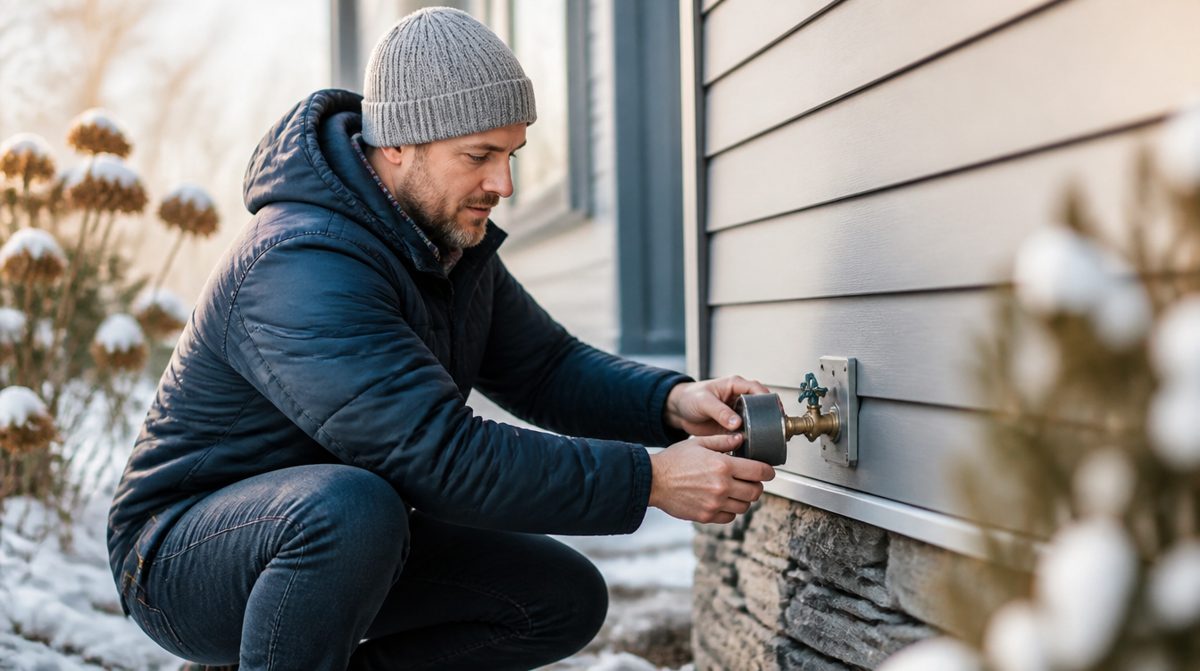
Outdoor faucets are among the first parts of a plumbing system to suffer in cold weather. Water trapped in a spigot or in the short run of pipe behind it can freeze, expand, and crack the line, often without any sign until the thaw reveals a leak inside a wall. The good news is that winterizing a hose bib takes less than an hour and needs only a few basic items. This guide walks through the process in order.
What You Will Need
- A bucket or small towel for drips
- An adjustable wrench or screwdriver, depending on your shutoff valve
- Foam faucet covers, if your faucet is not a freeze-resistant type
- A flashlight for dim basements and crawl spaces
Pick a day when temperatures are still above freezing so the water has time to drain and the pipes are easy to work around.
The Steps
- Disconnect every hose. Unscrew garden hoses, splitters, timers, and sprinkler attachments. A hose left attached traps water against the faucet and can cause freezing damage even on freeze-resistant models.
- Drain and store the hoses. Lift each hose to let the water run out, coil it loosely without kinks, and store it in a garage or shed.
- Find the indoor shutoff. Many homes have a dedicated valve for each exterior faucet, usually on the pipe a short distance inside the foundation wall, in a basement, crawl space, or utility area. Follow the pipe from the faucet inward to locate it.
- Close the shutoff valve. Turn it fully to the closed position. A lever handle is closed when it sits perpendicular to the pipe; a round handle closes clockwise.
- Open the outdoor faucet. Leave it open so trapped water can drain out. Place the bucket under any bleeder cap on the indoor valve and open that cap slightly to let the remaining water escape, then close it again.
- Let it drip out. Wait a few minutes until the flow stops completely. Leave the outdoor handle open through the winter so there is room for any leftover moisture to expand safely.
- Cover the faucet. If you have a standard spigot, fit an insulated cover snugly over it and make sure it seals against the siding. Freeze-resistant faucets generally do not need a cover once hoses are removed, but a cover adds a small margin of safety.
If You Cannot Find a Shutoff Valve
Some homes, especially older ones, have no dedicated valve. In that case, the faucet cannot be isolated from the rest of the system, and you should rely on a freeze-resistant model or a licensed plumber who can install a shutoff. Do not try to force the main water valve closed to solve this unless you know how to restore service safely afterward. A plumber can often add a proper valve quickly, and the work is usually small compared with the cost of a burst pipe, though you should get a quote from a licensed professional in your area.
Checking Your Work
After you have finished, go back to the faucet in a day or two. It should be dry, with no steady drip. A slow drip after you closed the indoor valve can mean the valve is not sealing fully. Try closing it a bit more firmly, but avoid using excessive force on old valves, which can break the stem. If it keeps dripping, that is a good reason to call a plumber before freezing weather arrives.
Inside the house, look at the pipe where it passes through the foundation. If the area feels drafty or the pipe is exposed to cold air, wrap it with foam pipe insulation and seal gaps around the wall opening. A cold draft across a pipe can freeze it even when the outdoor faucet itself is drained.
Spring Startup
When warm weather returns, reverse the process. Close the outdoor faucet, open the indoor shutoff slowly, and check for drips at the valve and along the pipe. Slow opening prevents a pressure surge. If you notice any leak inside the wall, such as damp drywall or a musty smell near the faucet location, shut the valve again and call a plumber.
Takeaway: Disconnect hoses, close the indoor valve, drain the line, and cover the faucet. Fifteen minutes of work each fall is a small price compared with repairing a pipe that froze and split inside a wall.